

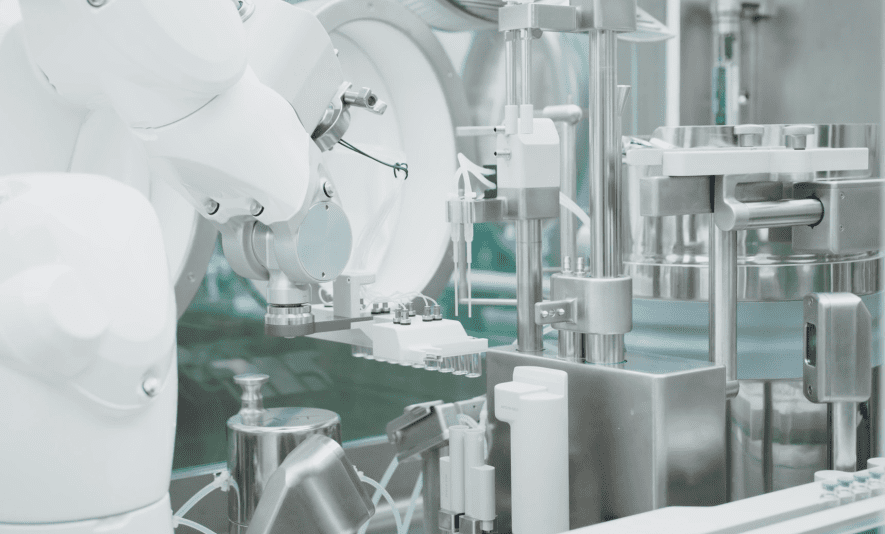
An important principle when implementing new technology for pharmaceutical manufacturing is that successful innovation never occurs in a vacuum. Crucial operational context should always inform a prospective solution, and that context is primarily provided by working with Life Science professionals in the field. The key to developing advanced aseptic filling technology is a real-world understanding of challenges that are common to the pharmaceutical fill-finish market. The tension for stakeholders in the industry is harmonizing innovative initiatives that, in concept, have substantial benefits for risk mitigation and product quality, but in practice, require technologies or capabilities that may not yet be available to scale fully realized, robust solutions.
The unique nature of Advanced Therapy Medicinal Products (ATMPs), in particular, represents a distinct challenge. Having a strong foundational understanding of the process requirements and the commonalities between identified challenges is essential. From that foundation, innovation begins to take shape. In aseptic filling, the scope of a new aseptic filling and closing technology goes beyond standalone operation and function; Design should take into account current regulatory standards and industry best practices, with a clear roadmap that guides the solution to maturity. This includes a clear Quality-by-Design approach from conceptualization to implementation that reflects the requirements and realities of aseptic processing in a cGMP environment.
Another example of this tension is the balance between the potential of technology to derisk aseptic processes versus the proven practical application of that solution in day-to-day operations. Conceptually, solutions like gloveless isolator systems address the greatest source of contamination (the operator), but, in operational settings, still face challenges in verifiably accounting for unpredictable or catastrophic scenarios. Practical feedback from operators is essential in designing new solutions to the reality of operation, the workflow and skill levels of operators, and the process demands and failsafes required by a product.

Key Areas of Focus in Biopharmaceutical Manufacturing Optimization:
Advancement in yield-optimizing solutions
Decreasing risk and improving connectivity
Pharmaceutical manufacturing automation will continue to enable ways to decrease risk in the design and implementation of aseptic processing. Planned and unplanned interventions are a point of emphasis, and with more advancements in robotic aseptic processing, automation for routine actions like environmental monitoring and plate maintenance will only improve. Additionally, new line processing designs that minimize the possibility of faults are being explored.
As automation and comprehensive data frameworks are more broadly applied to facility design across the industry, advancements like 24-hour production, remote monitoring and operations, and the use of digital twin technology for pharmaceutical fill-finish will come into focus.

Increased Efficiency, Empowered Operators
As automated solutions become more mature, they’ll collectively work towards more robust, more efficient operations. Modular, standardized automated fill-finish systems have scaled effectively beyond equipment to the cleanroom and facility, and can now be used to support decentralized pharmaceutical manufacturing. Process advancements like feedback-optimized automated decontamination and programmed redundancies like restoppering drastically increase machine uptime and improve product quality and operator safety. The progression of automated GMP technologies dovetails with the life of the operator, as biopharmaceutical manufacturing remains at its core human-driven. And as we look to the future of automation, the next industrial paradigm (Pharma 5.0) is built around how best to empower and improve the workflow of the operators at the center of the manufacturing process.
FAQs
What fill-finish process or operator pain point(s) will be the next to be addressed by automation and advanced technology?
Advanced solutions like digital twin technology have shown promise in eliminating or pre-empting key process challenges and pain points before they occur. Important use cases include key validation activities such as process optimization via recipe changes. These types of applications provide time-saving advantages, including an accurate understanding of process outputs, and can identify any potential process or automation challenges before they arise during production.
What are the key themes going forward that will influence innovation for drug product manufacturing?
The central drivers for innovation will largely remain the same; Any innovation that improves product quality and regulatory cohesion will be an advancement that the industry will coalesce around and implement. Newer concepts like Pharma 5.0 will continue to analyze and harmonize how digitization and pharmaceutical manufacturing automation intersect with and improve product quality as well as the life of the operator.
How do you implement a “zero-waste” approach when filling a drug product?
The goal of a zero-waste approach is to ensure that every available drop of drug product goes towards its intended use, safely and accurately dispensed in a final container. In order to execute zero-waste filling in pharmaceutical fill-finish, all aspects of fluid and container handling must be optimized, including pump priming and calibration, in-process weight checks, multi-point reject handling, and product-protecting approaches to planned and unplanned interventions.
In-process weight checks are a crucial aspect of the aseptic filling process. For high-yield products, end-to-end monitoring is critical to ensure containers are filled accurately and that dispensing technologies perform within specification. In-line IPC performs these checks with a delay to processing time if filling does not occur on the weigh cell. Offline IPC samples containers off the line to check quality, with varying delays to throughput depending on the sample rate. For many biopharmaceuticals, various approaches to 100 percent IPC are employed to ensure the quality and usability of the final drug product.


