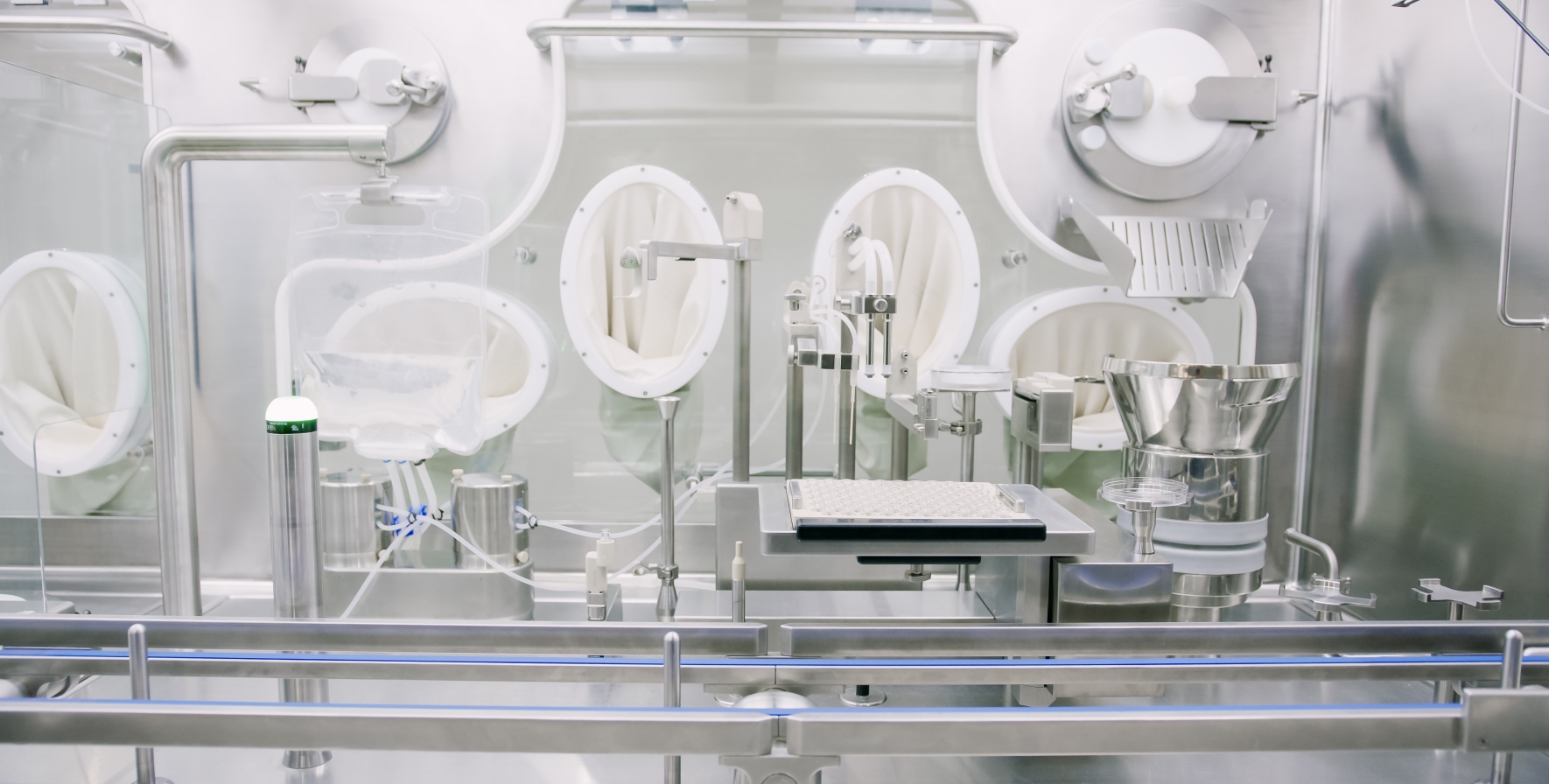
Automated fill-finish systems are now largely regarded as the gold standard for manufacturing sterile medicinal products as regulators continue to emphasize their advantages in reducing risk, improving repeatability, and enhancing data integrity. Whereas, just decades ago, advanced automated and robotic systems were seen as novel, the journey to standardization—and now a clear expectation across the industry—has been rapid. Combined with breakthroughs in smart technology, digital solutions, machine learning, and artificial intelligence, advanced aseptic processing systems are making treatments a reality that were once only conceptualized. At the forefront of the pivotal movement, AST, alongside key partners, brought the first-ever robotic multi-format fill-finish system to market in 2010.
Identifying Opportunities for Innovation
The current pharmaceutical market is characterized by ongoing developments in personalized medicine, small-batch production, high-yield processing, and flexible, multimodal operations, with many continuing areas of product growth according to industry intelligence. In the early-to-mid 2000s, however, many these sterile medicinal treatments were just being broached, with regulators providing the initial guidance for ATMPs starting in 2008.
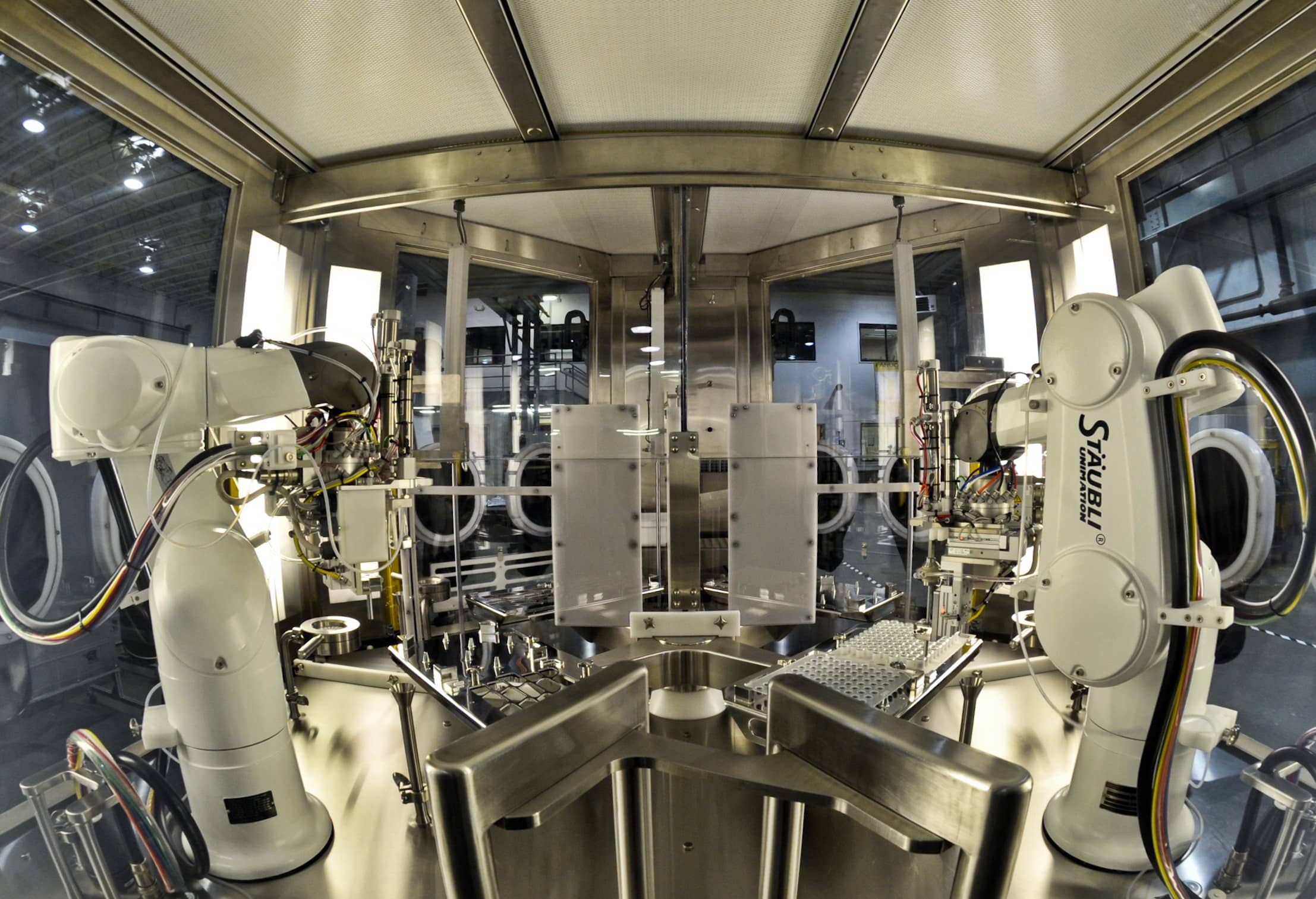
The inflection point for innovative solutions in the Life Sciences often precedes market trends. A specific product’s potential as an avenue for breakthrough treatments or a process advancement that redefines the way a product is manufactured and/or made available to patients opens up new market opportunities. The progress made through the work of pharmaceutical manufacturers brings ideas out of the realm of the possible into the realm of the probable. Major players in biotechnology often drive these initiatives through forward-looking work done through Research and Development. This was the case in the early 2000s, when AST was approached by a leading biotechnology company about developing a fill-finish machine capable of processing IV bags, vials, syringes, and cartridges on the same line. The company had previously put out inquiries and held meetings with equipment suppliers about the scope of the project but was unable to find a partner that would deliver the type of flexible production platform they had in mind. AST saw the opportunity, however, and a partnership began that would ultimately produce the ASEPTiCell, the pharmaceutical industry’s first robotic system capable of processing multiple different RTU formats on the same line. These key trends continue to be prevalent today.
Breakthroughs in patient-centered medicine:
The arrival of ATMPs—using properties of human biology to develop highly targeted and highly personalized drug products for previously untreatable and incurable diseases—represented a wholesale paradigm shift in biotechnology and the Life Sciences. The breakthrough put the tangible treatment of cancers, autoimmune diseases, gene-based syndromes, and countless rare conditions on the table for R&D initiatives across the industry. The new treatments came with new production demands: targeted/smaller batch sizes, higher yield and product stewardship requirements, multi-modal flexible operation designed around product specifications, and a faster, reimagined model of the production-to-patient journey.
Advancements in pharmaceutical packaging:
This new operational model necessitated and coincided with another key advancement and industry shift: Ready-to-Use packaging solutions. The demand for multi-format processing was only amplified with the increased availability and standardization of RTU formats. With crucial steps in container preparation removed and sterility ensured through advanced processes like gamma irradiation, commercial and custom RTU containers opened new avenues of pharmaceutical production. While the early iteration of RTU containers was largely limited to syringes, the early 2000s saw the arrival of commercially available vials, syringes, and cartridges.
The process advantages of automation and robotics:
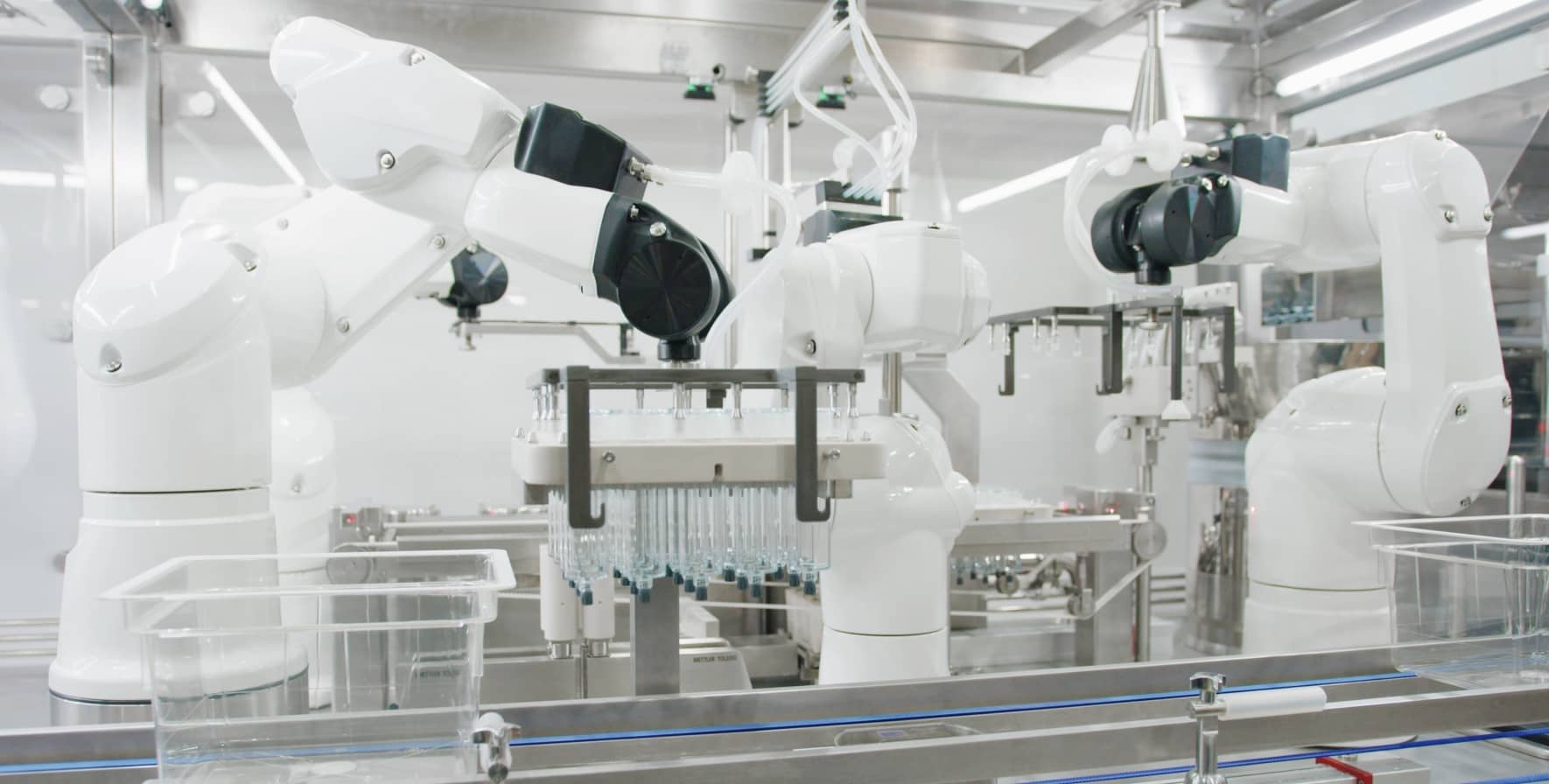
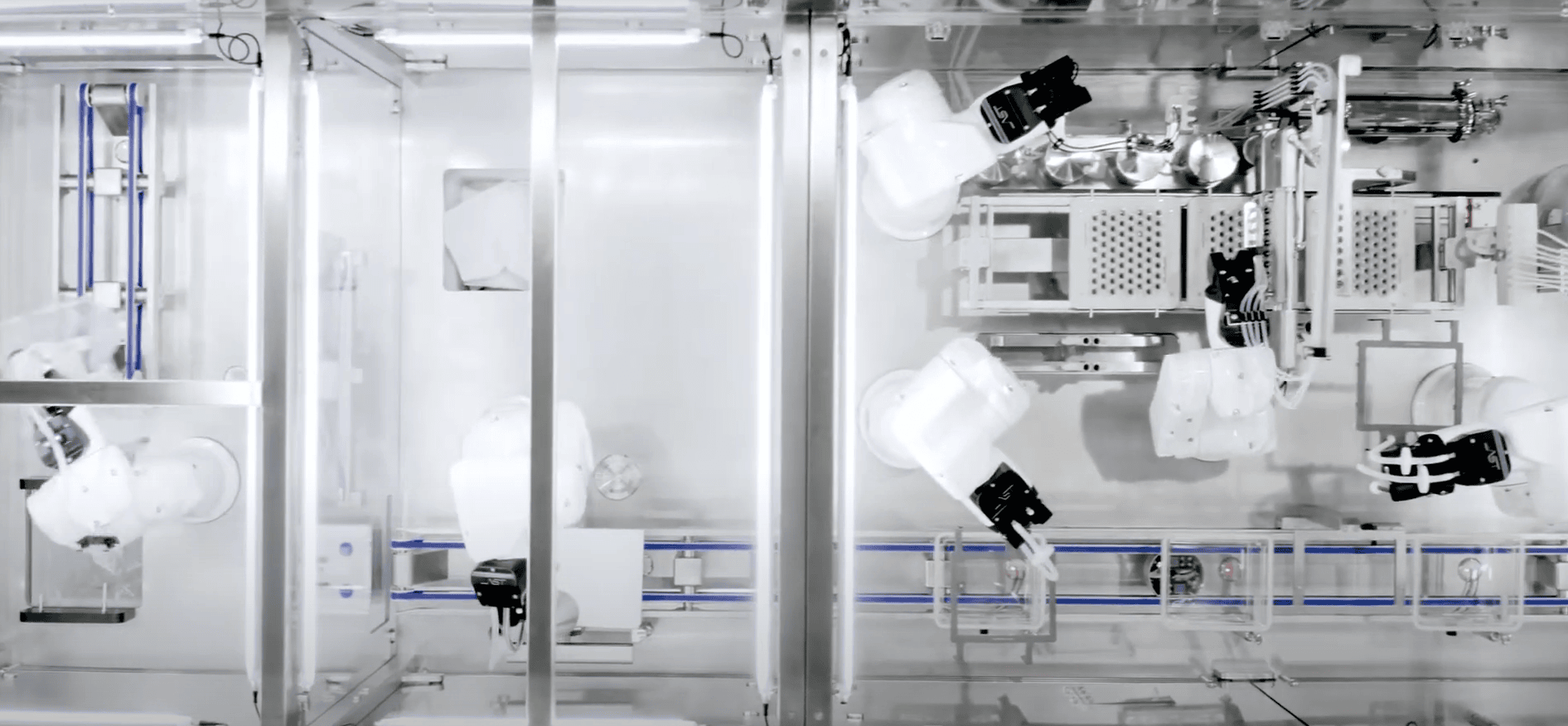
A central aspect of the industry’s move towards flexible filling and closing machines was the intersection of change parts with advanced robotic operations. Early applications for the sterile operation of robotics created new opportunities for optimizing aseptic operations and the day-to-day workflow of operators. With the introduction of programmable, multi-axis robotic technology like Staubli’s Stericlean series, new standards of product quality could be reached. This breakthrough introduced highly accurate, repeatable technology specifically designed for the realities of cleanroom production. Leveraging aseptic surface design, smooth, non-turbulent movement, and decontamination/wipe down compatibility, the advances in robotics automated complex, often ergonomically challenging manually aseptic operations without any of the risk posed by traditional methods (higher variability, less accuracy and more potential sources of contamination). AST designed and developed format-based change parts that simplified the changeover process between containers, a new modality that would serve as a template for flexible fill-finish machines going forward.
Today, the ASEPTiCell features over 15 years of generational improvements and is a trusted production platform for the flexible, robotic processing of the latest sterile parenteral products.
Read the full story of the groundbreaking collaboration on the industry’s first robotic multi-format fill-finish line.